“We continue to deliver on our strategy by growing our existing core business as well as expanding into new geographies and working to develop new businesses such as carbon capture and storage, synthetic fuels, blue hydrogen technologies, renewables, and offsets.”
These include:
Five Aramco facilities have so far been awarded Global Lighthouse Status by the World Economic Forum. As of April 2025, we are the only international energy company to be represented in the Network by more than three facilities, a recognition and clear endorsement of our world-leading implementation of 4IR technologies, deployed to deliver a range of operational and environmental benefits.
Aramco continues to demonstrate our strong operational flexibility and supply reliability by delivering crude and other products in a timely manner.
We believe Aramco is well-positioned to actively participate in addressing the world’s growing need for affordable and reliable energy7.
We are providing continued investment to help meet this future market demand.
Our corporate strategy supports energy security and affordability, and promotes sustainable practices in support of an orderly and balanced Energy Transition.
Part of being a sustainable business in 2025 requires the adoption and implementation of a clear emissions reduction strategy. This is why Aramco have stated our ambition to attain Net-zero Scope 1 and Scope 2 greenhouse gas emissions across our wholly-owned operated assets by 2050.
The price of shares and the income derived from them can go down as well as up and investors may not get back the amount originally invested. Investors should be aware that past performance is not necessarily a guide to future performance. An investment in Saudi Aramco shares may not be suitable for all investors. You should take independent financial advice before making any investment decision.
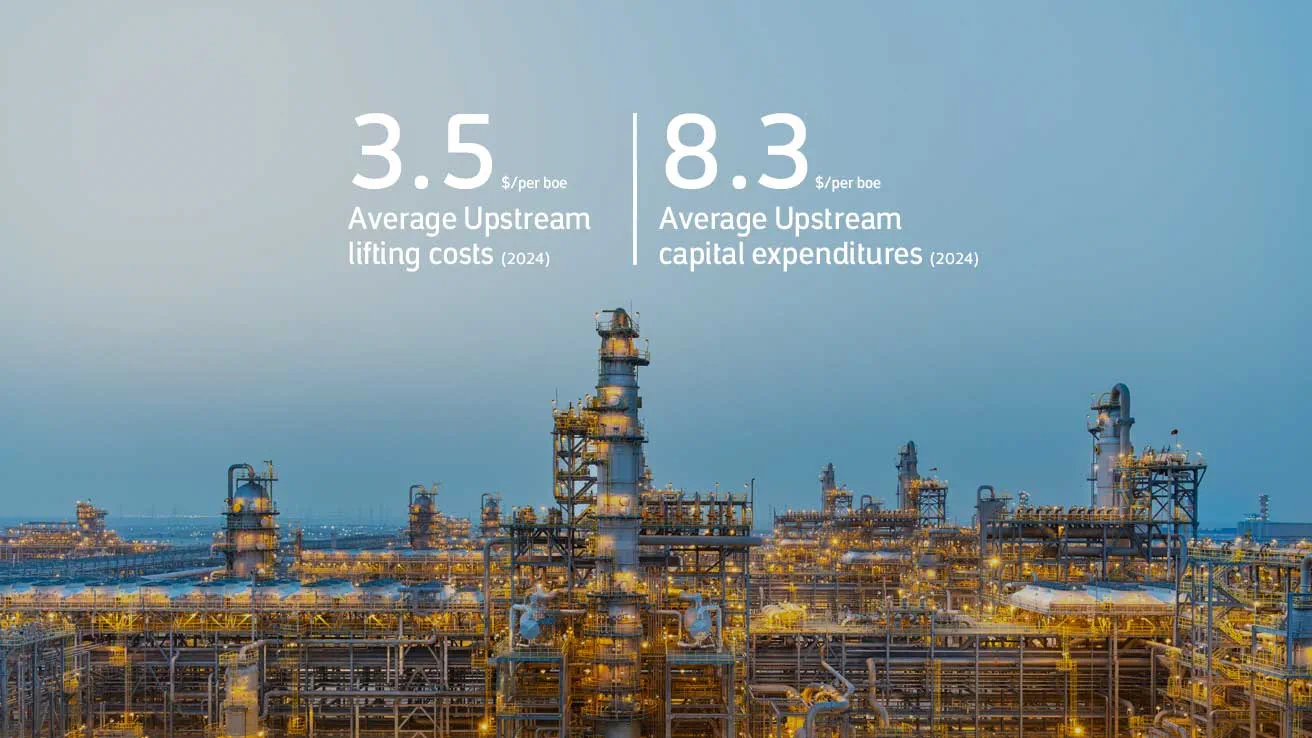
1. ‘Low-cost’ refers to our low lifting cost and capital expenditures per barrel of oil equivalent produced, based on our 2023 reported figures
2. Refers to Aramco’s Digital Transformation program — learn more about it here
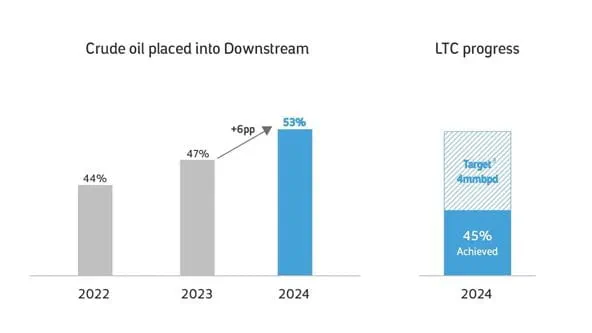
3. Target to increase capacity in petrochemical producing complexes to up to 4mmbpd by 2030
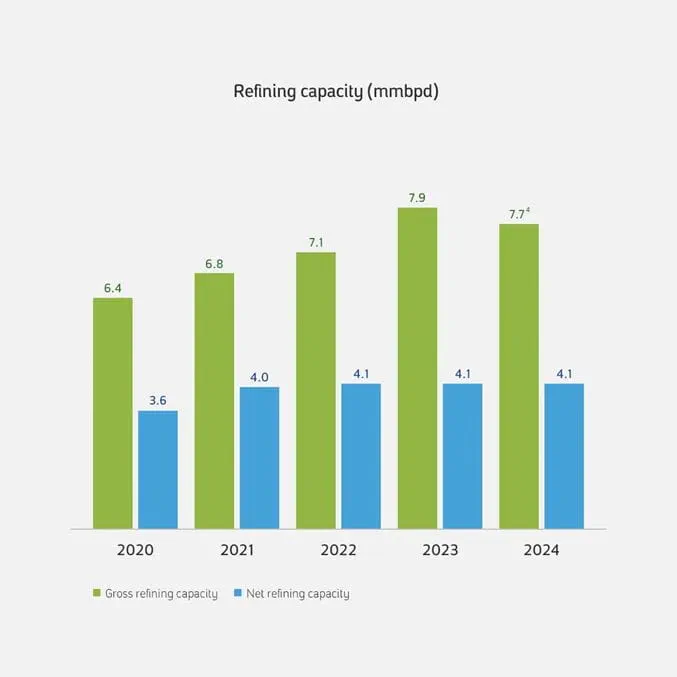
4. The reduction in gross refining capacity was due to termination of Idemitsu Kosan’s Yamaguchi refinery operations in 2024
5. Excludes SABIC Agri-Nutrients business for 2024 and SABIC Agri-Nutrients and Metals (Hadeed) businesses for 2023 and includes only ZPC’s net chemical production capacity through our investment in Rongsheng
6. The reduction in net chemicals production capacity is due to the termination of operations of three assets related to SABIC mainly in Europe
7. Based on IEA World Energy Outlook 2022: Total primary energy demand in IEA NZE Scenario — outlook-for-energy-demand
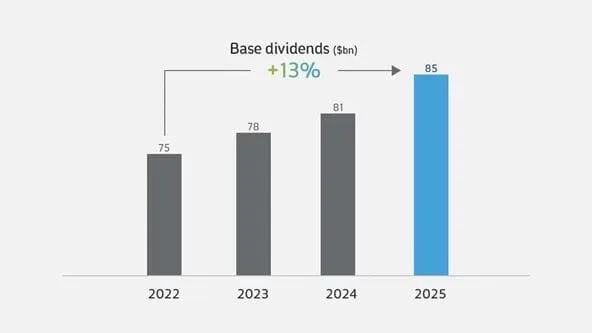
8. Dividends are subject to the Board’s discretion and declared in accordance with the dividend distribution policy